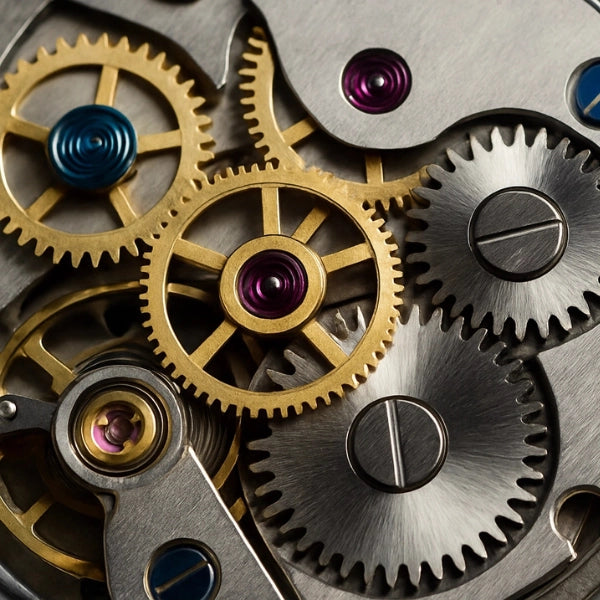


If you have ever looked at a watch dial and wondered what all the extra subdials, hands, windows, and scales actually do, you are not alone. This guide breaks down watch complications in simple terms so beginners in Singapore can understand what features matter, how they work, and which ones are worth paying for.
Whether you are shopping for your first serious timepiece or comparing dress, travel, and everyday watches, understanding complications helps you buy smarter. Once you know the difference between a chronograph, GMT, moonphase, power reserve, and annual calendar, it becomes much easier to choose a watch that fits your lifestyle instead of just your budget.
A “complication” in watchmaking means any function beyond simply telling the time with hours, minutes, and sometimes seconds. The word sounds complex, but the idea is straightforward. If a watch can time an event, track another time zone, show the date, display the moonphase, or indicate how much power is left, those are complications. Some are practical for daily use. Others are admired for craftsmanship, heritage, and visual appeal.
For many first-time buyers, the challenge is not finding a watch they like. The challenge is understanding whether the extra features are useful, reliable, easy to read, and worth the added cost. A beautifully designed watch with useful complications can offer much more long-term satisfaction than a model chosen only because it looks impressive in photos.
At Maison Timepieces, many buyers begin by comparing style, size, and finish, but complications often become the deciding factor. A simple three-hand watch may be perfect for clean office wear, while a GMT can make more sense for travel, and a chronograph may appeal to buyers who enjoy sportier design. If you are exploring refined everyday options, you can browse the Maison Executive collection, the classic Maison Heritage collection, the elevated Maison Prestige collection, or the versatile Maison Urban collection.
What Is a Watch Complication?
In traditional horology, a complication is any feature on a watch that goes beyond basic time display. The more functions a watch has, the more mechanically advanced it is considered. In simple terms:
- A watch showing only hours and minutes is very simple.
- A watch with a date window adds one complication.
- A watch with a chronograph, date, and GMT adds multiple complications.
Complications can be mechanical, automatic, or quartz-driven depending on the movement inside the watch. What matters most to beginners is not the technical vocabulary, but how the complication improves real-life use. A complication should either make the watch more functional, more informative, or more enjoyable to own.
Why Complications Matter When Buying a Watch
Complications matter because they affect price, thickness, style, usability, and maintenance. Two watches may look similar at first glance, but a simple date model and a chronograph can feel very different on the wrist and in daily use.
Here is why understanding complications matters:
- Value: You avoid paying extra for functions you will never use.
- Practicality: You can choose features that match travel, work, or daily wear.
- Design: Complications change dial layout, symmetry, and overall visual character.
- Maintenance: More complicated watches can cost more to service over time.
- Collecting confidence: You can compare brands and models more intelligently.
For example, someone who travels between Singapore, Vietnam, Japan, and Europe may benefit far more from a GMT than from a moonphase. Meanwhile, someone who loves classic watchmaking may enjoy the romance of a moonphase even if it has no daily utility. Neither preference is wrong. The key is knowing what you are buying.
The Most Common Watch Complications Beginners Should Know
1. Date Complication
The date complication is the most common and beginner-friendly feature after basic timekeeping. It usually appears as a small window showing the current date, often at 3 o’clock or 6 o’clock.
Why people like it: It is practical, simple, and useful every day.
What to watch out for: Some date windows disrupt dial symmetry, while others blend in beautifully. On certain watches, the date may need manual adjustment at the end of shorter months.
For many buyers, a date complication offers the best balance between function and simplicity. It is often the safest choice for a first proper watch.
2. Day-Date Complication
A day-date complication shows both the day of the week and the date. This can appear through two windows or through a larger display layout. It is especially useful for office wear and daily organization.
Best for: Buyers who want a practical everyday watch with added convenience.
Style effect: Slightly busier than a simple date watch, but still easy to wear in formal or business settings.
3. Chronograph
A chronograph is one of the most popular watch complications because it combines function with sporty visual appeal. In simple terms, it is a stopwatch built into the watch. Most chronographs have pushers on the side of the case to start, stop, and reset timing, along with subdials that track elapsed seconds, minutes, or hours.
What it does: Lets you measure elapsed time, such as workout sessions, parking time, cooking, meetings, or race intervals.
How to identify it: Look for two pushers near the crown and subdials on the dial.
Why beginners like it: It looks dynamic, technical, and premium.
What to consider: Chronographs usually create a busier dial and thicker case. Some buyers love this presence, while others prefer cleaner three-hand watches.
Chronographs also come in different layouts, including bi-compax and tri-compax designs. Even when owners do not use the stopwatch daily, they often enjoy the strong, purposeful look it adds to the watch.
4. GMT
GMT is one of the most useful complications for modern life, especially for travellers and anyone managing time across countries. A GMT watch typically allows you to track a second time zone using an additional hand and a 24-hour scale.
What it does: Helps you read home time and local time at once.
Best for: Frequent travellers, international business owners, remote workers, and anyone with family overseas.
Why it matters: A GMT is one of the few complications that delivers immediate, real-world value.
For example, if you live in Singapore but regularly coordinate with London, Tokyo, or New York, a GMT can help you avoid mental calculation. It is also a complication with strong collector appeal because of its connection to aviation, travel, and classic tool-watch design.
5. Moonphase
The moonphase complication shows the current phase of the moon through a small aperture on the dial. It is one of the most poetic complications in watchmaking and is often chosen for beauty, heritage, and craftsmanship rather than daily necessity.
What it does: Displays the lunar cycle visually.
Best for: Buyers who appreciate traditional watchmaking, elegant design, and a more romantic aesthetic.
What to know: It is usually less practical than a GMT or chronograph, but often more visually distinctive.
A moonphase complication can transform the mood of a watch. It adds softness, storytelling, and sophistication. For formal or dress-oriented buyers, this can be a major attraction.
6. Power Reserve Indicator
A power reserve indicator shows how much stored energy remains in the movement before the watch stops running. This is particularly useful on manual-wind watches and some automatic models.
What it does: Tells you how much running time is left.
Best for: Enthusiasts who rotate between several watches or enjoy mechanical movements.
Why it helps: It gives the watch a more interactive ownership experience.
If you own multiple watches and do not wear the same one daily, a power reserve indicator can be genuinely useful. It helps you know whether the watch needs winding before use.
7. Annual Calendar
An annual calendar is a more advanced complication that automatically accounts for months with 30 or 31 days, needing adjustment only once a year at the end of February.
What it does: Tracks the date with fewer manual corrections than a standard calendar.
Best for: Buyers who enjoy higher-end complications and more technical watchmaking.
What to consider: It is more sophisticated, but also less essential for most beginners.
For those entering the luxury watch world, an annual calendar is often appreciated not because it is mandatory, but because it demonstrates mechanical refinement.
8. Perpetual Calendar
A perpetual calendar is an even more advanced version of the calendar complication. It is designed to account for leap years and varying month lengths automatically, meaning it should require minimal correction if kept running.
What it does: Tracks date logic with exceptional complexity.
Best for: Serious collectors and buyers interested in high horology.
Beginner verdict: Impressive, but usually not the first complication to prioritize.
Perpetual calendars are admired because they represent extraordinary mechanical engineering. For most beginners, however, they are more educational than practical due to cost and complexity.
9. Dual Time
A dual time complication is related to GMT but not always identical. It shows a second time zone, often through a separate subdial or display rather than a GMT hand.
Why people choose it: It can be easier to read on some dial layouts and often feels elegant rather than sporty.
If you want international usefulness without the classic GMT look, a dual time watch can be an excellent alternative.
10. World Time
A world time watch is designed to display the time in multiple cities around the world simultaneously, usually with a rotating city ring and 24-hour indication.
Best for: Travellers, collectors, and people who appreciate visually impressive complications.
Reality for beginners: Fascinating and beautiful, but more complex than most people need.
World time watches are often admired as conversation pieces because they combine function, design, and global perspective in one dial.
Which Complications Are Best for Beginners?
If you are just starting out, the best beginner complications are usually the ones you will actually use:
- Best all-rounder: Date
- Best for travel: GMT or Dual Time
- Best for sporty style: Chronograph
- Best for traditional elegance: Moonphase
- Best for mechanical enthusiasts: Power Reserve
A good beginner strategy is to choose one primary complication rather than trying to get everything at once. Watches with too many features can become cluttered, harder to read, and more expensive to service. A well-designed watch with one useful complication often delivers a better ownership experience than a complicated watch that feels confusing.
Complications and Watch Style
Complications also influence the overall identity of a watch. This matters because the same buyer may want very different designs for work, evenings, weekends, and travel.
- Dress watches: Often suit date, moonphase, or power reserve complications.
- Sport watches: Often pair well with chronograph and GMT functions.
- Everyday business watches: Usually work best with date or day-date layouts.
- Collector-focused pieces: May include annual calendar, perpetual calendar, or world time displays.
If you prefer clean lines and timeless versatility, simpler complications usually age better. If you enjoy technical detail and visual energy, more elaborate dials may feel more exciting. There is no single correct answer, only a better fit for your lifestyle.
Do More Complications Mean a Better Watch?
Not necessarily. More complications do not automatically make a watch better for you. They make a watch more complex, and often more expensive, but the best watch is the one you enjoy wearing and can understand easily.
A clean three-hand or date watch can be more elegant, more legible, and more versatile than a crowded multi-complication watch. On the other hand, a beautifully executed GMT or chronograph can offer both practicality and personality. The smart approach is to judge complications by relevance, execution, and readability rather than by quantity alone.
Questions Beginners Should Ask Before Choosing a Complication
Before buying, ask yourself:
- Will I use this function regularly?
- Is the dial still easy to read?
- Does this complication suit my wardrobe and lifestyle?
- Am I comfortable with potentially higher servicing costs?
- Do I want practicality, craftsmanship, or visual impact?
These questions quickly narrow your options. A traveller may move toward GMT. A classic dresser may prefer moonphase. A daily office wearer may stick to date or day-date. A sporty buyer may gravitate toward chronograph. That is how complications become useful rather than confusing.
How to Build Confidence as a New Watch Buyer
One of the best ways to build confidence is to compare watches by use case rather than brand hype alone. Brand names such as Rolex, Omega, Longines, Tissot, Cartier, Seiko, and TAG Heuer are often discussed when buyers first learn about complications, but the right choice always depends on how you intend to wear the watch.
Look closely at the dial layout, hand design, case thickness, bracelet or strap style, and whether the complication adds real convenience. A beginner who understands these basics is already making better decisions than many impulse buyers.
It also helps to choose from collections that offer different personalities for different needs. A cleaner executive design may work best for meetings and formal wear. A heritage-inspired model may suit classic style lovers. A prestige-oriented piece may suit gifting and statement dressing. A more urban design may suit modern everyday use. Exploring those categories makes the buying process simpler and more intentional.
Final Thoughts: Buy the Complication That Matches Your Life
Watch complications are not just technical features. They shape the way a watch looks, feels, and functions on your wrist. For beginners, the smartest path is to focus on understanding before buying. Once you know what a chronograph, GMT, moonphase, date, and power reserve actually do, you can choose with much more confidence.
If your goal is daily practicality, a date or GMT may be the most rewarding. If you want bold visual appeal, a chronograph is a strong choice. If you love classic artistry, a moonphase offers timeless charm. The best complication is not the most famous one. It is the one that fits the way you live.
Maison Timepieces is an independent retailer of authentic designer watches. All trademarks belong to their respective owners.